




A remarkable private aviation experience often feels deceptively simple.
You arrive at the airport minutes before departure. The aircraft is ready. The cabin is prepared to your preferences. The crew welcomes you aboard. Shortly after takeoff, the only thing left to think about is where you’re going.
For many travelers, that’s the entire experience. And that’s exactly the point.
What distinguishes exceptional private aviation isn’t what happens in the cabin. It’s everything that happens before you ever step on board.
Long before the aircraft arrives on the ramp, aviation professionals are evaluating operators, validating safety records, reviewing maintenance histories, monitoring weather systems, coordinating airport logistics, and analyzing routing scenarios. The journey may feel effortless to the passenger, but behind every seamless departure is a network of decisions designed to make certainty possible.
In private aviation, the aircraft is only part of the product. The real value lies in the expertise, oversight, and infrastructure supporting every flight.
 Not All Charter Flights Are Created Equal
From the outside, private aviation can appear surprisingly uniform.
Many charter providers offer access to similar aircraft categories. Performance specifications look comparable. Availability is often presented as immediate and interchangeable.
Yet experienced flyers understand that two aircraft with similar specifications can represent entirely different standards of operation.
The difference is rarely visible on a website or booking platform. It lives behind the scenes in the quality of the operator, the rigor of maintenance practices, the experience of the flight crew, and the strength of the safety systems supporting every journey.
This is where aviation expertise matters.
A private jet should never be evaluated solely by its cabin size, range, or appearance. The more important question is whether the people responsible for that aircraft meet the standards required to earn a traveler’s trust.
True aviation authority starts long before a tail number is selected. It begins with a commitment to standards that exceed the minimum requirements.
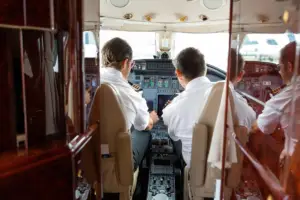 What happens before Departure
Every flight plan represents far more than a route between two destinations.
Behind the scenes, multiple layers of analysis come together to ensure the journey is as safe, efficient, and reliable as possible. While travelers may never see this work, they benefit from it throughout every stage of the experience.
Operator Verification
The quality of any flight begins with the operator responsible for the aircraft.
Experienced aviation advisors continuously assess operators against strict safety criteria, reviewing everything from pilot qualifications and recurrent training records to operational procedures and safety management systems. Maintenance oversight, compliance history, and operational performance all contribute to a more complete understanding of whether an operator meets the standards required for a mission.
The goal is not simply regulatory compliance. The goal is confidence.
Continuous Weather and Routing Analysis
Weather conditions can shift quickly across a flight’s route, creating challenges that must be anticipated well before departure.
Flight operations teams monitor changing weather systems, airspace restrictions, airport conditions, and routing opportunities to optimize both safety and efficiency. Alternate airports are evaluated, fuel requirements are adjusted, and routing decisions are refined as conditions evolve.
Most passengers never notice these adjustments. That’s by design.
When done correctly, operational complexity remains invisible while the travel experience remains uninterrupted.
 Aircraft Maintenance and Airframe Oversight
Every aircraft brings its own operational history.
Before a flight is approved, aviation professionals review maintenance records, service requirements, inspection schedules, and manufacturer recommendations to ensure the aircraft meets expected standards. Ongoing maintenance oversight helps verify that the airframe, systems, and components continue to perform as intended.
For travelers, this level of scrutiny may never be visible.
Its value becomes apparent in the reliability and consistency they experience every time they fly.

The Luxury of Not Having to Think About Any of It
The most sophisticated travelers are not looking to manage operational details themselves.
They choose private aviation because they value time, certainty, and peace of mind. They want to know that weather has been analyzed, operators have been vetted, maintenance records have been reviewed, and routing decisions have been carefully evaluated before they arrive at the airport.
The highest standard of private aviation is not simply transporting passengers from one destination to another.
It’s creating an experience where the complexity disappears.
When every operational detail has been addressed by experienced professionals, travelers are free to focus on the things that matter most, whether that’s preparing for a meeting, spending time with family, or simply enjoying the journey.
That confidence doesn’t happen by accident.
It’s built through expertise, strengthened through oversight, and reinforced through a commitment to standards that extend far beyond what passengers can see.
Experience the Difference Expertise Makes
The next time you board a private aircraft, remember that the journey began long before you arrived at the airport.
Behind every seamless departure is an invisible framework of safety, planning, and operational excellence designed to make travel feel effortless.
Because true aviation authority is not measured by what happens in the air.